The Role of CFM Ratings in Selecting Your Perfect Pool Dehumidifier

Understanding CFM Ratings in Dehumidifiers
What is CFM and Why It Matters
Cubic Feet per Minute, or CFM, measures the volume of air a dehumidifier moves through its system every 60 seconds. In the world of swimming pool dehumidifiers, CFM stands out as a critical spec because it directly influences how effectively the unit combats moisture in enclosed spaces like indoor pools. High CFM ratings ensure robust airflow, pulling in humid air from the natatorium and expelling drier air back into the room. Without adequate CFM, even the best swimming pool dehumidifiers falter, leaving pools damp and uncomfortable.
Pool owners often overlook CFM when shopping for a dehumidifier for swimming pool areas, but experts emphasize its role in maintaining air quality. For instance, in a typical indoor swimming pool setup, low CFM leads to stagnant air pockets where humidity builds up unchecked. This not only promotes mold growth but also strains HVAC systems. Selecting units with CFM ratings matched to your pool's square footage—say, 100-200 CFM for smaller residential setups—prevents these issues. Commercial swimming pool dehumidifiers, used in places like YMCAs, demand even higher CFM to handle larger volumes of evaporated water from heated pools.
Ultimately, CFM determines the dehumidifier's capacity to refresh the entire room volume multiple times per hour. Aim for at least four air changes per hour in natatoriums to keep conditions optimal. Brands offering adjustable CFM settings provide flexibility, allowing users to dial in performance based on seasonal humidity spikes or pool usage intensity. By prioritizing CFM, you invest in long-term efficiency and comfort for your indoor pool environment.
The Role of CFM in Humidity Control
CFM plays a pivotal role in humidity control by dictating how quickly a dehumidifier processes air laden with moisture from swimming pools. Higher CFM means the unit cycles through more air, extracting water vapor more efficiently and preventing relative humidity from climbing to uncomfortable levels. In indoor pools, where evaporation rates soar due to warm water and body heat, insufficient CFM results in sluggish dehumidification, fostering a sauna-like atmosphere that discourages swimmers.
Consider a dehumidifier for pool rooms: optimal CFM ensures even distribution of dry air, targeting high-moisture zones near the water surface. This is especially vital in heavy-use facilities, where swimming pool moisture removal becomes a daily battle. Units with strong CFM ratings integrate seamlessly with ventilation systems, enhancing overall pool dehumidification without overworking the equipment. For example, a 500 CFM model excels in medium-sized natatoriums, balancing energy use with effective humidity control.
Humidity control extends beyond comfort; it protects equipment like water filters and heaters from corrosion. When CFM aligns with the room's air volume, dehumidifiers maintain stable conditions, reducing the need for frequent interventions. Pool dehumidifiers with variable speed fans adjust CFM dynamically, responding to real-time humidity sensors for precise management. This approach not only curbs excess moisture but also optimizes airflow patterns, ensuring no corner of the indoor swimming pool escapes treatment.
ASHRAE Guidelines and CFM Recommendations
ASHRAE, the American Society of Heating, Refrigerating and Air-Conditioning Engineers, sets authoritative standards for indoor environments, including natatoriums. Their guidelines recommend CFM ratings that achieve 4-6 air changes per hour in swimming pool areas to manage evaporation effectively. For a standard indoor pool room of 5,000 cubic feet, this translates to at least 333 CFM, ensuring humidity stays below 60% relative humidity.
ASHRAE stresses tailoring CFM to factors like pool surface area and water temperature, as hotter pools generate more vapor. In commercial settings, such as YMCA facilities, ASHRAE-compliant swimming pool dehumidifiers often feature CFM upwards of 1,000 to handle crowds and intense activity. These recommendations stem from extensive research on pool moisture control, highlighting how proper CFM prevents condensation on surfaces and maintains air quality.
Following ASHRAE guidelines empowers owners to select reliable dehumidifiers for swimming pools that meet regulatory needs while promoting energy efficiency. For residential indoor pools, starting with ASHRAE's baseline CFM calculations—room volume divided by desired air changes—guides purchases. Advanced models even incorporate ASHRAE-inspired controls, auto-adjusting CFM based on humidity readings. Adhering to these standards not only enhances dehumidification but also extends the lifespan of pool infrastructure, from decks to ceilings.
Selecting the Right Dehumidifier for Your Indoor Pool
Factors to Consider When Choosing a Dehumidifier
Choosing the right dehumidifier for your indoor pool starts with assessing the space's size and usage patterns. Key factors include the room's cubic volume, expected swimmer load, and local climate, all of which influence the necessary CFM and capacity. For pool dehumidifiers, prioritize units that handle at least 90 pints of water removal per day in humid environments, ensuring swimming pool humidity control remains consistent.
Energy consumption ranks high among considerations; look for models with efficient compressors that pair well with your existing heating setup. Integration with smart controls allows remote monitoring, vital for unattended indoor pools. Don't ignore noise levels—quieter operation suits residential natatoriums, while robust builds endure commercial demands like those in community centers.
Budget plays a role, but focus on long-term value: heavy duty swimming pool dehumidifiers might cost more upfront yet save on repairs. Consult expert information from manufacturers to match features like auto-defrost to your needs. Ultimately, a well-chosen dehumidifier for swimming pool areas transforms damp spaces into inviting retreats, balancing performance with practicality.
Comparison of Desiccant vs. Refrigerant Dehumidifiers
Desiccant dehumidifiers use moisture-absorbing materials like silica gel to capture humidity, excelling in colder temperatures where refrigerant models struggle. Ideal for indoor pools in cooler climates, they maintain efficiency without freezing coils, making desiccant dehumidifiers a top pick for consistent swimming pool dehumidification. However, they consume more energy due to built-in heaters for regeneration.
Refrigerant dehumidifiers, or compressor-based units, cool air to condense moisture, offering lower operating costs in warmer settings. They dominate the market for residential indoor swimming pools, providing quick dehumidified air output. Yet, in sub-65°F rooms, performance dips, necessitating defrost cycles that interrupt operation.
Comparing the two, desiccant types suit variable climates and deliver drier air (below 40% relative humidity), while refrigerants shine in energy saving for steady, moderate conditions. For commercial swimming pool dehumidifiers, hybrids combine both technologies for versatility. Evaluate based on your natatorium's temperature range—desiccant for cold, refrigerant for warm—to achieve optimal pool moisture control without excess costs.
Evaluating Energy Saving Features
Energy saving features in swimming pool dehumidifiers cut operational costs while maintaining humidity control. Look for variable-speed fans that adjust CFM based on demand, reducing power draw during low-moisture periods. Inverter technology in compressors modulates speed, avoiding the energy spikes of on-off cycles common in older models.
Eco-modes integrate with humidity sensors, shutting down once targets hit 50-60% relative humidity, a sweet spot for indoor pools. Heat recovery systems repurpose warmth from dehumidification to assist heating, boosting efficiency in natatoriums. These features prove essential for commercial setups, where 24/7 operation amplifies savings.
Certifications like Energy Star validate claims, ensuring your dehumidifier for pool environments performs without waste. Pairing with LED controls and insulated cabinets further minimizes losses. Owners of heavy duty units report up to 30% reductions in bills, making energy saving a cornerstone of smart selection for sustainable swimming pool dehumidifiers.
Heavy Duty vs. Standard Pool Dehumidifiers
Heavy duty swimming pool dehumidifiers tackle high-moisture commercial environments, boasting CFM ratings over 1,000 and capacities exceeding 200 pints daily. Built with corrosion-resistant materials, they withstand chlorine exposure in busy natatoriums like YMCAs, ensuring reliable dehumidification for large indoor pools.
Standard pool dehumidifiers suit smaller residential setups, with CFM around 200-500 and pint removal up to 90. They offer affordability and ease of installation but may falter under heavy use, requiring frequent emptying. For occasional family swims, standards provide ample pool moisture control without overkill.
The choice hinges on scale: heavy duty models include advanced filters and diagnostics for longevity, while standards prioritize simplicity. In transitional spaces like hotel pools, heavy duty edges out for durability. Both categories advance humidity control, but heavy duty swimming pool dehumidifiers deliver unmatched robustness for demanding applications.
The Importance of Relative Humidity in Natatoriums
Ideal Humidity Levels for Indoor Pools
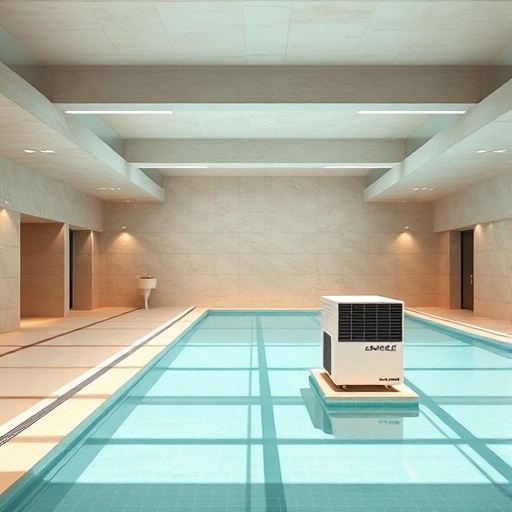
Ideal relative humidity in natatoriums hovers between 50% and 60%, striking a balance that keeps swimmers comfortable without promoting condensation. Indoor pools naturally push humidity higher due to evaporation, so maintaining this range requires vigilant dehumidification. Exceeding 60% leads to foggy air and slippery decks, while below 40% dries skin and eyes excessively.
Achieving these levels involves calculating based on pool size and activity—busier sessions demand stronger intervention. Swimming pool dehumidifiers with hygrostats auto-regulate to hit targets, ensuring consistent indoor swimming pool dehumidifiers performance. Experts recommend monitoring with digital gauges for precision in home or commercial setups.
Benefits extend to health: optimal relative humidity curbs respiratory irritants from chlorine vapors. In YMCAs or schools, adhering to this prevents downtime, fostering enjoyable aquatic experiences. Regular adjustments via CFM-tuned units keep natatoriums inviting year-round.
Impact of Humidity on Pool Infrastructure
Excess humidity ravages pool infrastructure, causing rust on metal fixtures and warping wooden elements in indoor pools. High relative humidity accelerates corrosion in heaters and water filters, shortening their lifespan and inflating maintenance costs. Natatoriums suffer most, with unchecked moisture leading to structural weaknesses over time.
Condensation drips from ceilings, pooling on floors and breeding slip hazards or mold. In commercial swimming pools, this damages HVAC ducts, disrupting climate control. Effective swimming pool humidity control via dehumidifiers shields investments, preserving aesthetics and safety.
Long-term, humidity erodes grout and tiles, especially in high-traffic areas. Proactive DCA pool moisture control dehumidification—targeting 50-60%—mitigates these risks, extending infrastructure durability. Owners who ignore impacts face costly overhauls; instead, integrate robust pool dehumidifiers to safeguard every component.
Cement and Material Considerations for Humidity Control
Cement surfaces in natatoriums absorb moisture, leading to efflorescence and cracking if relative humidity exceeds safe levels. High humidity promotes alkali salts leaching from concrete, staining decks and walls around indoor pools. Proper dehumidification keeps cement dry, preventing these deteriorations.
Other materials like drywall and paint fare poorly in damp conditions, peeling or molding quickly. Select dehumidifiers for swimming pool areas that circulate air evenly, drying cement thoroughly. In commercial settings, vapor barriers under slabs enhance protection, but humidity control remains key.
Consider grout in tiled areas; excess moisture weakens bonds, inviting leaks. ASHRAE-informed strategies pair cement treatments with high-CFM units for comprehensive care. By addressing material vulnerabilities, owners ensure natatoriums endure, blending functionality with longevity through smart humidity management.
Troubleshooting Common Dehumidifier Issues
Signs Your Dehumidifier Needs Maintenance
Persistent high relative humidity signals a dehumidifier issue, often from clogged filters restricting airflow in swimming pool dehumidifiers. Listen for unusual noises like rattling, indicating loose components or fan imbalances. Reduced water collection in the tank points to sensor failures or coil icing, common in indoor pool environments.
Visible leaks or frost buildup demands immediate attention, as they impair efficiency and risk water damage to the room. Odors emerging from the unit suggest mold inside, a hazard in humid natatoriums. Regular checks prevent escalation, keeping pool moisture control intact.
Diminished CFM output manifests as uneven drying, leaving corners damp. For heavy duty models, monitor error codes on displays. Early detection through these signs extends life, ensuring reliable dehumidification for your indoor swimming pool.
Expert Tips for Effective Troubleshooting
Experts advise starting troubleshooting by cleaning filters monthly, as debris hampers CFM in swimming pool dehumidifiers. Check drainage lines for blockages, flushing with vinegar to dissolve mineral buildup from pool vapors. Verify power supply and thermostat settings, ensuring the unit activates below 60% relative humidity.
For refrigerant models, defrost coils gently with warm water if iced. Desiccant units benefit from inspecting rotors for even rotation. Use a multimeter to test sensors, replacing faulty ones for accurate humidity control. In natatoriums, align intake vents away from direct water splashes.
Document performance logs to spot patterns, like seasonal dips. Pair with expert information from manuals for model-specific fixes. These steps empower owners to resolve most issues swiftly, maintaining optimal dehumidified air without professional intervention.
When to Call a Professional
Call a professional if troubleshooting fails to restore CFM or water removal in your dehumidifier for swimming pool use. Persistent electrical issues, like short circuits, pose safety risks demanding certified technicians. Complex problems, such as refrigerant leaks, require EPA-licensed experts to handle recharges legally.
In commercial natatoriums, where downtime affects operations, pros diagnose via specialized tools, ensuring compliance with ASHRAE standards. If the unit shows internal damage from corrosion—common near indoor pools—replacement might be wiser than repair.
Budget for annual servicing to preempt calls; pros calibrate systems for peak efficiency. For heavy duty swimming pool dehumidifiers, manufacturer warranties often mandate professional work. Timely intervention prevents broader humidity control failures, safeguarding your investment.
Innovative Technology in Pool Dehumidification
Heat Pumps and Their Role in Climate Control
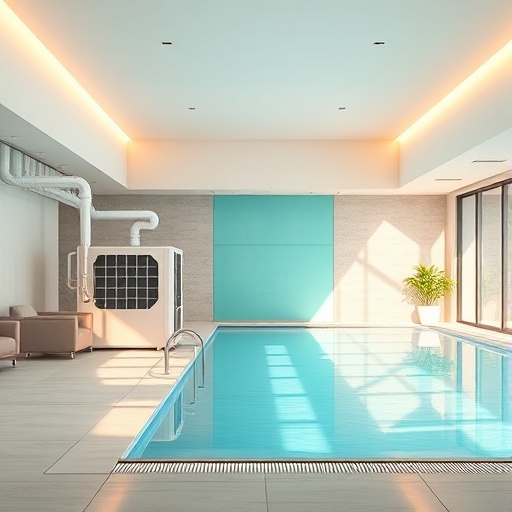
Heat pumps revolutionize pool dehumidification by extracting heat from humid air to warm the space, integrating dehumidification with heating seamlessly. In indoor pools, they maintain 80-85°F air temperatures while slashing relative humidity, dual-tasking for efficient climate control. This technology recycles energy, outperforming traditional heaters in natatoriums.
Advanced heat pump dehumidifiers adjust CFM and output based on sensors, optimizing for swimmer comfort. They reduce reliance on separate boilers, cutting costs in commercial swimming pools. Pairing with water heaters enhances overall efficiency, dehumidifying without drying the air excessively.
Innovations like variable refrigerant flow allow precise zoning, ideal for large indoor swimming pool dehumidifiers. Users report 40% energy savings, making heat pumps a staple for modern pool moisture removal. Their role in climate control elevates natatorium experiences, blending warmth and dryness effortlessly.
Overview of Nexgen Technologies
Nexgen technologies push boundaries in swimming pool dehumidifiers, incorporating AI-driven controls for predictive humidity management. These systems analyze usage patterns in indoor pools, auto-adjusting CFM to preempt spikes from lap sessions or classes. Nexgen's modular designs allow scalability, suiting residential to YMCA-scale natatoriums.
Key features include hybrid desiccant-refrigerant cores for all-climate performance, plus IoT connectivity for remote oversight. Energy saving algorithms minimize runtime, while self-cleaning filters extend maintenance intervals. In commercial applications, Nexgen excels in heavy duty dehumidification, handling chlorinated air without degradation.
Overview reveals focus on sustainability: low-GWP refrigerants and recycled materials define their ethos. Users praise seamless integration with existing HVAC, enhancing overall pool dehumidification. Nexgen represents the future, delivering smart, robust solutions for humidity control in diverse settings.
Future Trends in Swimming Pool Dehumidifiers
Future trends in swimming pool dehumidifiers emphasize smart integration, with app-controlled units forecasting humidity via weather data for proactive CFM adjustments. Nanotechnology coatings on coils repel contaminants, boosting longevity in indoor pools. Expect widespread adoption of solar-assisted models, slashing energy costs for eco-conscious owners.
Biomimetic designs, inspired by natural drying processes, promise ultra-efficient moisture removal without harsh chemicals. In natatoriums, VR interfaces could simulate maintenance, aiding non-experts. Trends point to compact, wall-mounted heavy duty options for space-strapped commercial spaces.
Advancements in materials like graphene enhance heat pumps, accelerating dehumidification cycles. As regulations tighten on energy use, ASHRAE-aligned innovations will dominate. These developments ensure swimming pool dehumidifiers evolve, offering smarter, greener humidity control for tomorrow's aquatic venues.
See Also
- Exploring Desiccant Technology in Heavy Duty Pool Dehumidifiers
- Understanding Relative Humidity and Its Impact on Swimming Pool Maintenance
- The Science Behind Swimming Pool Dehumidifiers and Energy Efficiency
- Innovative Solutions for Humidity Management in YMCA Indoor Pools
- Energy Saving Tips for Heating and Dehumidifying Your Indoor Pool